
Limitless Possibilities — Consumer Tech Designed Since 2011

0%

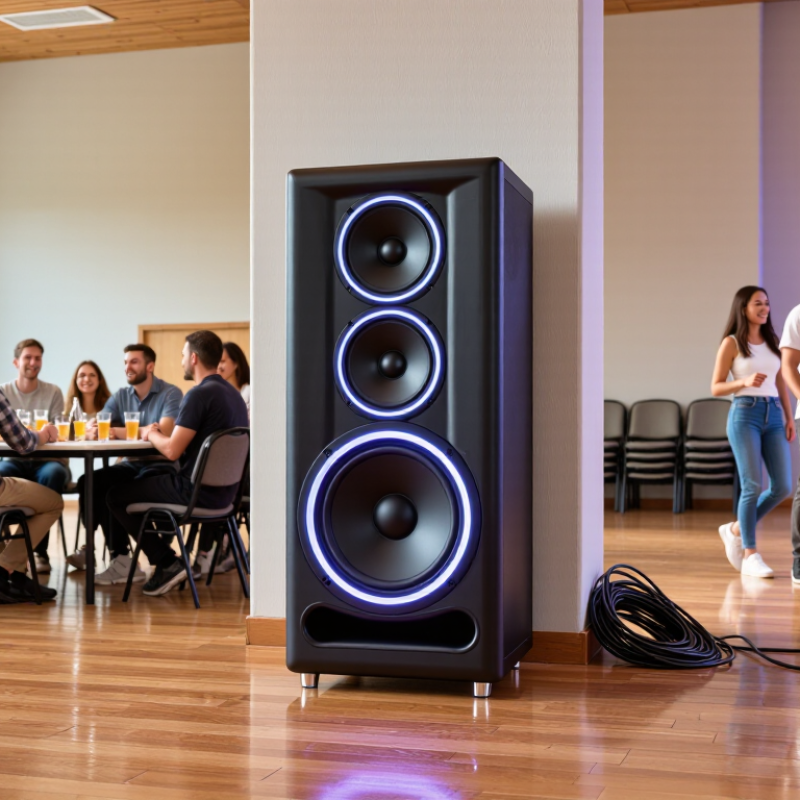
Choosing a Powered Party Speaker starts with the room, the crowd, and the kind of music you play. A small patio needs different coverage from a packed community hall. Before comparing wattage, picture the setup: guests talking near the tables, people dancing several metres away, and the speaker placed beside a wall or in a corner. These details shape how loud and clear the system feels.

Sound-system designer Bob McCarthy is known for his work on system design and coverage. A fair paraphrase of a practical lesson from that work is: “Aim for even coverage, not impressive numbers on a spec sheet.” Treat that as guidance, not a verified direct quotation. It points to a common buying mistake: choosing a speaker by peak power alone. Check continuous output, coverage, connection options, weight, and whether a microphone or mixer is built in. Then consider setup time. A speaker that sounds strong but takes too long to connect may be the wrong fit for a casual event.

This guide explains how to compare those features without getting lost in marketing claims. It also considers battery operation, bass response, portability, and room size. Small compromises matter. A lighter cabinet may be easier to carry, while a larger woofer may deliver fuller bass. Match the Powered Party Speaker to your real events, not an imagined maximum crowd.
How to Choose the Best Powered Party Speaker?

Define Your Party Speaker Needs and Event Size

Before comparing powered party speakers, define what the event actually needs. A birthday dinner for 25 people in a carpeted living room needs different coverage from a garden gathering of 80. Small rooms behave differently. Note the guest count, room shape, and whether people will sit, dance, or talk across the music. A long, narrow room may need sound reaching its far end, while a compact space can become harsh if the speaker is turned up too high.

Think about the sound itself. Background music and announcements need clear voices; dancing calls for fuller bass and enough volume to stay audible over conversation. Check the speaker’s coverage and maximum output, not just its wattage. Wattage alone is not a reliable measure of how loud or clear a system will sound in your space. For outdoor events, sound spreads without walls to contain it, so you may need more headroom or a second speaker. Also check for the inputs you need, such as Bluetooth or a microphone connection, and confirm that a power outlet is nearby.

Estimate the listening area, not just the guest list. People clustered near the speaker may find it loud while guests by the patio gate hear very little. A rough estimate can still be wrong; test the placement before guests arrive, if possible. Walk to the farthest seating spot and listen for clear vocals. That small check can reveal more than a specification sheet.

Compare Output Power and Coverage for Your Venue

Choosing a powered party speaker starts with the room, not the biggest wattage number. Watts describe electrical power, but they do not tell you how loud or clear a speaker will sound. Compare the published maximum SPL, and check whether the maker also provides continuous ratings. Test details can vary, so treat headline figures as a guide rather than a guarantee. Watts alone mislead.

Coverage matters just as much. A narrow room may need one speaker aimed down its length, while a wide patio may need two speakers spaced apart. Check the speaker’s horizontal and vertical coverage angles, then consider where guests will stand. A speaker aimed at the dance floor may leave people near the tables hearing weak vocals. Walk the room. Listen from the back corners, not only beside the speaker.

For a small gathering, moderate output with even coverage often works better than one powerful cabinet pushed hard. Larger venues, high ceilings, and outdoor spaces usually need more headroom because sound spreads and reflections differ. Keep voices clear before adding bass; booming low notes can mask announcements and conversation. A tape measure and a quick listening test beat guessing, though neither is perfect. Exact needs depend on the crowd and layout. My estimate may still be off, so check coverage with the room occupied if possible.

How to Choose the Best Powered Party Speaker?

Compare continuous amplifier power and horizontal coverage when planning for different venue sizes.

These are illustrative planning profiles, not specifications for particular products. Higher amplifier power does not automatically mean greater coverage or louder sound; speaker sensitivity, maximum SPL, room acoustics, audience size, and placement also matter. Check manufacturer specifications and audition the system in your venue.

Evaluate Sound Quality and Connectivity Options

How to Choose the Best Powered Party Speaker?

Sound quality matters most at the volume you will actually use. Do not rely on peak watts alone. Check maximum sound pressure level, frequency response, and distortion figures at a stated output. In a real test, play a vocal track and a bass-heavy song from several feet away. Voices should stay clear; bass should not rattle the cabinet. The ITU-R BS.1116-3 recommendation describes controlled listening tests for detecting small audio impairments. Use a similar, repeatable comparison when auditioning speakers.

Connectivity affects how smoothly a party runs. The Bluetooth SIG’s 2024 Market Update forecasts annual Bluetooth device shipments rising from 5.4 billion in 2023 to 7.5 billion in 2028. That figure covers many device types, not speakers, but it shows how common wireless audio has become. Still, check Bluetooth range and whether the speaker can pair with two sources or link to another unit. Small details matter.

For dependable setup, look for balanced XLR or TRS inputs for a mixer, plus a clearly labeled microphone input if you need one. Test the cables you plan to use. Wireless pairing can be convenient, but crowded rooms may bring dropouts or delay. I would not assume every speaker’s linking feature works with every other model. That’s easy to miss.

Check Portability, Durability, and Power Requirements

Choose a speaker you can actually move. Check its full carrying weight, including the battery, and whether its handle fits your grip. A compact cabinet is easier to lift, but it may not cover a large yard evenly. For outdoor events, check the IP code against IEC 60529. It indicates protection from dust and water ingress, not resistance to every impact or weather condition. A rating is not a durability guarantee. Small detail, big difference.

Match power to the space, not just the wattage printed on a product sheet. Compare continuous power ratings, maximum sound pressure level, and the maker’s stated coverage; wattage alone does not predict loudness. Check battery runtime at a stated volume, since playback time can drop sharply at high output. NIOSH’s Criteria for a Recommended Standard: Occupational Noise Exposure sets 85 dBA over eight hours, with exposure time halving for each 3 dB increase. That is workplace guidance, not a party-volume target. Still, it’s useful context. Consider checking sound levels where guests will stand, and leave headroom so music stays clear without running the speaker flat out.

How to Choose the Best Powered Party Speaker? — Check Portability, Durability, and Power Requirements

Dimension What to Check Practical Guidance Why It Matters
Portability and weight Speaker weight, built-in handles, wheels, and overall size For frequent carrying, look for a manageable weight and well-placed handles. For larger units, wheels can make transport across flat surfaces easier. A powerful speaker can be difficult to move; portability affects how easily you can set up and pack away.
Battery operation Whether the speaker has a rechargeable battery and its stated playback time Compare the manufacturer’s battery estimate with your expected event length. Playback time can change with volume, bass level, lighting, and other features. Battery operation is useful where mains power is unavailable, but runtime estimates are not guaranteed under every listening condition.
Weather and splash resistance IP rating, if provided, and any stated limits on outdoor use An IPX4 rating indicates resistance to water splashing from any direction under specified test conditions; it does not mean the speaker is waterproof or suitable for submersion. Outdoor events can expose equipment to splashes or light rain. Check the rating and care instructions before use.
Build quality Cabinet material, grille protection, controls, and stability Look for a sturdy enclosure, a protective grille, secure controls, and a stable base. Avoid placing the speaker where it can be knocked over. Party settings often involve frequent handling and crowded spaces, increasing the risk of bumps or falls.
Output power Rated continuous (RMS) power and the conditions used for the rating Compare continuous power ratings where available. Treat peak-power figures cautiously, because they describe short-term output and are not directly comparable to continuous ratings. Power figures alone do not determine loudness or sound quality; speaker sensitivity, room size, and listening distance also matter.
Coverage and sound level Intended audience size, listening distance, and speaker coverage Choose a speaker suited to the space and audience rather than relying only on wattage. A larger or open area generally needs more output than a small indoor room. Suitable coverage helps music reach listeners evenly without requiring excessive volume.
Mains power and electrical safety Power input requirements, supplied cable, and access to a suitable outlet Check the speaker’s electrical specifications and use a properly rated outlet and cable. Keep connections dry and follow the product’s ventilation and safety instructions. Powered speakers need an appropriate electrical supply when running from mains; safe setup reduces the risk of electrical or equipment problems.
Inputs and playback options Bluetooth, wired audio inputs, microphone inputs, and any available pairing features Choose the connections that match your devices and event needs. A wired input can be useful as an alternative when wireless playback is unsuitable. Compatible connections make setup simpler and allow music or microphones to be used as needed.
Final fit for your event Transport route, event duration, venue size, weather exposure, and power access Prioritize low weight for frequent transport, battery operation for locations without outlets, and suitable weather resistance for outdoor use. The best choice balances portability, durability, and power requirements for the actual event rather than maximizing one specification.

Balance Useful Features Against Your Budget

How to Choose the Best Powered Party Speaker?

Balance Useful Features Against Your Budget

A powered party speaker includes its own amplifier, so you can connect a source without buying a separate amp. Start with the space you need to fill. A speaker for a kitchen gathering may not need the output required for a crowded backyard. Listen at a realistic volume, not just a quick burst in a shop. Clear vocals and steady bass matter more than a long list of flashy settings. Check the inputs you will actually use, such as Bluetooth or a wired microphone. Extra ports are only useful if they fit your plans.

Tips: Set a firm spending limit before comparing models. Prioritize sound quality, dependable connections, and manageable weight. If you host outdoors, check battery life and whether the speaker can handle light splashes. Treat advertised battery hours as estimates; high volume can shorten playback. Keep some budget for a sturdy stand or protective cover.

Skip features that add cost without solving a real problem. Built-in lights can be fun, but they may matter less than easy controls or a handle that feels secure when carrying the speaker. If possible, test the speaker with music you know. Bring a short playlist. Notice whether the sound stays balanced when you move away from it. I would not rely on one listening test alone; room acoustics and crowd noise can change the experience. A slightly imperfect fit is possible, so favor useful basics you will appreciate at every gathering.

FAQS

Why shouldn’t I choose a speaker by peak watts alone?

Peak watts do not show how clean a speaker sounds at useful volume. Check maximum sound pressure level, frequency response, and distortion figures at a stated output.

How can I test sound quality before buying?

Play a familiar vocal track and a bass-heavy song from several feet away. Voices should remain clear, and bass should not rattle the cabinet. Bring a short playlist.

Which connections should I check?

Look for Bluetooth, balanced XLR or TRS inputs, and a clearly labeled microphone input if needed. Test the cables you plan to use.

What should I know about Bluetooth pairing?

Check the range and whether the speaker supports two sources or can link with another unit. Crowded rooms may cause dropouts or delay. Small details matter.

Will linking speakers always work across models?

Do not assume it will. Linking features may not work between different models, so check compatibility before planning your setup.

How do I choose a speaker for my space?

Match output to the setting. A kitchen gathering may need less volume than a crowded backyard. Listen at a realistic level, not just a quick burst.

What should I consider for outdoor use?

Check battery life and resistance to light splashes. Advertised playback hours are estimates; high volume can shorten them. Outdoor plans can change quickly.

Which extra features are worth paying for?

Prioritize clear sound, reliable connections, manageable weight, and easy controls. Lights may be fun, but a secure handle or sturdy stand could matter more. I still find one quick audition misleading.

Conclusion

Choosing the right Powered Party Speaker starts with understanding your event: consider the number of guests, the venue size, and whether the speaker will be used indoors or outdoors. Match its output power and sound coverage to the space so music remains clear and balanced without being unnecessarily loud. Compare sound quality, including vocal clarity and bass response, and check that the available connections suit your devices and setup.

Practical details matter too. A portable design can make transport and setup easier, while sturdy construction is helpful for frequent use. Review how the speaker is powered and whether its battery life or access to an outlet fits your event plans. Finally, weigh useful features against your budget, focusing on the qualities you will actually use. This approach helps you choose a speaker that suits your venue, listening needs, and spending limit.

Evelyn Grace

Evelyn Grace

Evelyn Grace is a marketing professional with a strong understanding of the company’s products, customer needs, and the practical considerations behind choosing the right solution. Through ongoing research and close collaboration with colleagues across the business, Evelyn turns product knowledge......