Frequently Asked Questions Powered Party Speaker Sourcing FAQ
Addressing common technical, logistical, and OEM questions asked by global audio importers and retail procurement directors.
What defines a true high-performance Powered Party Speaker for commercial distribution?
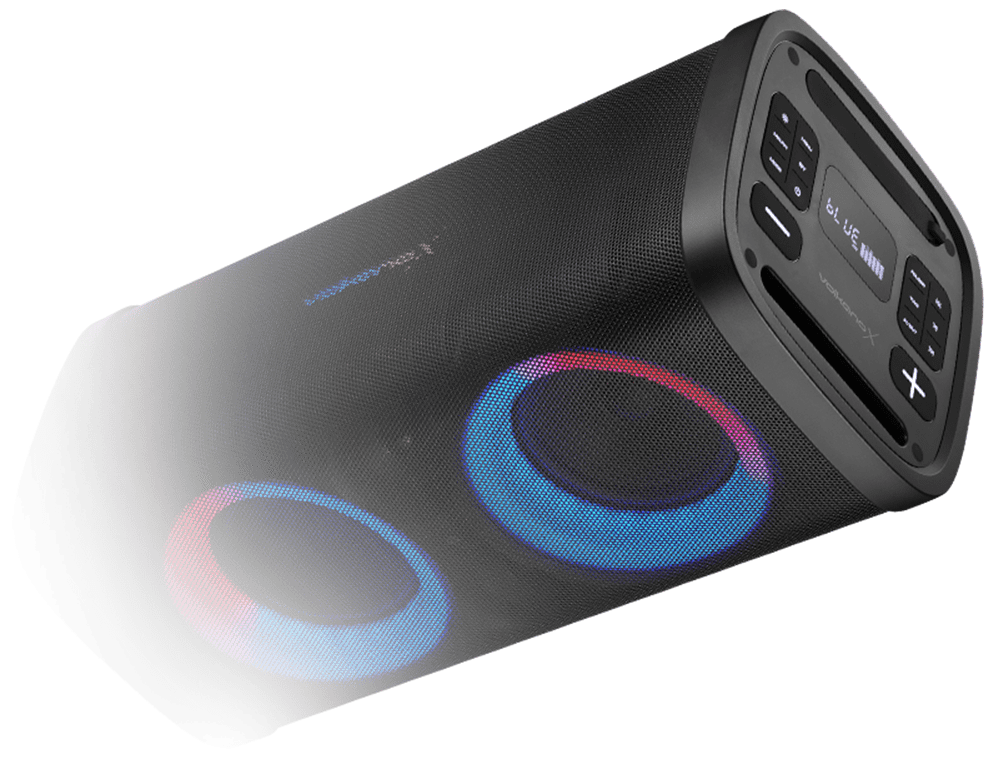
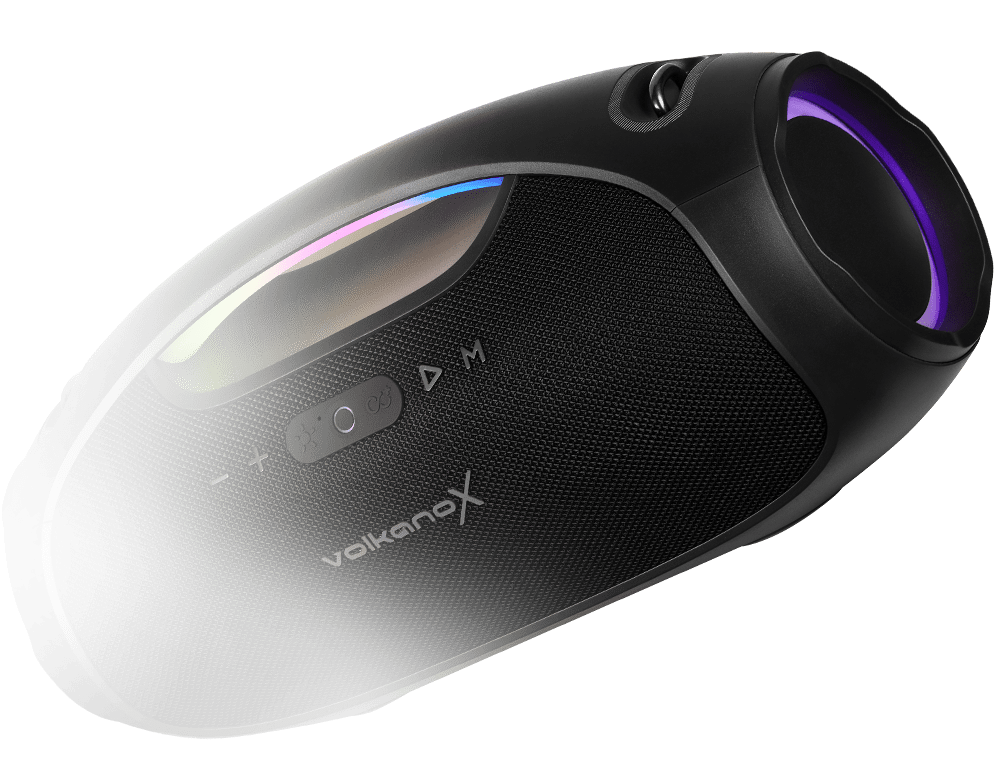
A commercial-grade Powered Party Speaker integrates active high-efficiency amplification (Class-D), multi-driver acoustic transducer arrays, onboard DSP signal processing, dynamic low-frequency response (extending below 45Hz), high peak SPL (sound pressure level exceeding 105dB), dynamic lighting synchronization, and versatile input topology including Bluetooth 5.3, TWS stereo linking, UHF wireless microphones, and wired instrument preamps.
How should wholesale procurement managers evaluate RMS Wattage vs. Peak PMPO in party speakers?
Buyers should strictly evaluate RMS (Root Mean Square) continuous wattage output rather than peak PMPO (Peak Music Power Output). RMS measures continuous clean audio power delivered across the frequency spectrum at a specified Total Harmonic Distortion (THD < 1%). PMPO is an unstandardized marketing metric. Reliable manufacturers such as Volkano disclose true RMS power ratings alongside amplifier power rail voltages and driver thermal dissipation ratings.
What battery certifications are required for global maritime and air freight of powered party speakers?
Powered party speakers containing high-capacity lithium-ion battery packs require UN38.3 transport safety testing reports, Material Safety Data Sheets (MSDS), UN 3481 equipment classification compliance, and IEC 62133 safety certification. Compliance with these international standards prevents customs impoundment and enables streamlined ocean and air freight logistics.
What are the technical advantages of DSP multi-band dynamic compression in outdoor party speakers?
Digital Signal Processing (DSP) allows acoustic engineers to implement real-time dynamic range compression, thermal protection, limiter controls, and psychoacoustic bass boost algorithms. This ensures that even at maximum volume levels, woofer cone excursion remains strictly controlled, avoiding voice coil bottoming and amplifier clipping while maximizing bass impact without over-draining battery capacity.
Can Volkano customize OEM/ODM powered party speakers for regional retail chains?
Yes. Volkano provides full OEM/ODM manufacturing services. Our in-house product developers and acoustic designers handle custom sound voicing curves, bespoke front-grille metal laser cutting, customized RGB LED pulse sequences, private-label silk printing, localized power brick adapters (EU/US/UK/AU), customized retail packaging artwork, and tailored firmware Bluetooth broadcast IDs.
What is the typical Minimum Order Quantity (MOQ) for custom OEM powered party speakers?
Standard OEM customized production runs typically start at 1,000 units per SKU. For established regional distributors selecting standard Volkano factory packaging and existing colorways, smaller trial order volumes can be accommodated based on localized warehouse inventory availability.
How does TWS (True Wireless Stereo) distance differ between Bluetooth 5.0 and Bluetooth 5.3?
Bluetooth 5.3 provides significantly improved frequency-hopping algorithms and RF power stability compared to earlier Bluetooth versions. In powered party speaker applications, Bluetooth 5.3 extends reliable line-of-sight TWS stereo pairing up to 15–20 meters with lower power consumption and negligible audio latency drift between the primary and secondary speaker units.
What post-sales warranty support does Volkano provide to international distributors?
Volkano backs all products with published warranty terms and conditions. We offer spare parts allocations (including replacement power boards, amplifier PCBs, wireless microphones, and battery cartridges) alongside dedicated technical support to streamline after-sales service for our global retail partners.