Choosing a reliable Waterproof Hiking Backpack supplier requires more than comparing catalog photos. China has a broad manufacturing base, serving outdoor brands, retailers, and private-label businesses worldwide. This guide introduces ten notable suppliers and examines their practical strengths, product focus, and production capabilities.
Water resistance depends on details. Look for coated fabrics, sealed seams, protected zippers, reinforced stress points, and tested closure systems. A backpack may survive light rain but fail during prolonged exposure. That difference matters on wet trails. Supplier experience also deserves attention. Ask about factory audits, material sourcing, sample development, quality inspections, and production lead times. Certifications can support trust, but they should be verified rather than accepted blindly.
No supplier is perfect. A polished sample can hide inconsistent bulk production. Small stitching issues may appear after repeated use. For that reason, responsible buyers should request samples, inspect inner seams, and test loaded packs under realistic conditions. Product design should also match the intended user, from day hikers carrying two liters of water to trekkers managing heavier equipment. Pricing matters, but the cheapest quotation may create higher replacement costs later. This overview aims to provide a practical starting point, using observable manufacturing factors instead of exaggerated promises. Some supplier information may change over time, so direct confirmation remains necessary. Reliability is built through evidence, communication, and repeated performance.
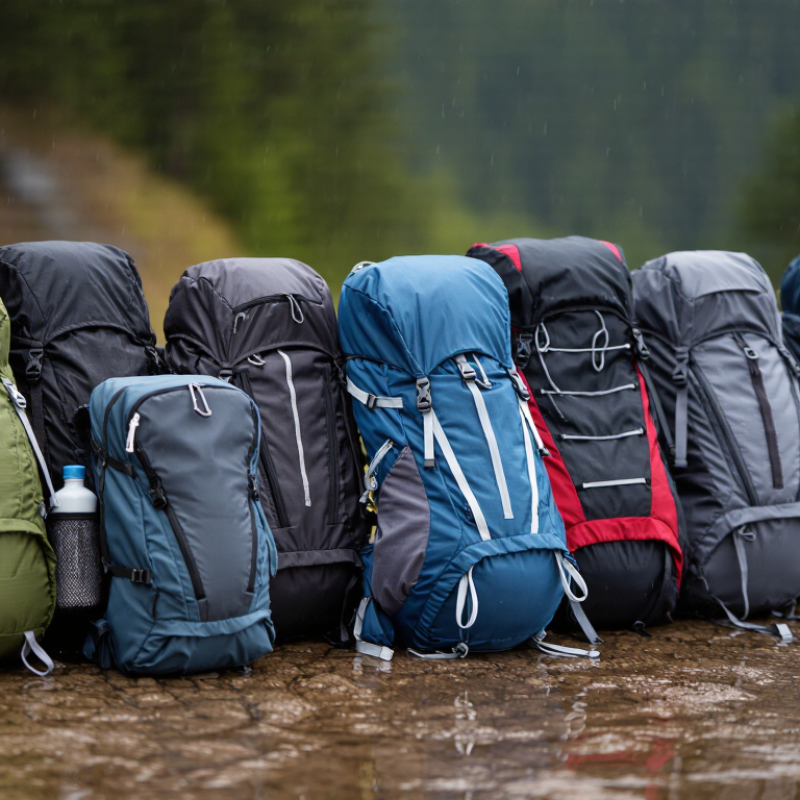
China’s waterproof hiking backpack suppliers serve a broad outdoor equipment market. The Outdoor Industry Association’s 2024 report recorded 175.8 million American outdoor participants in 2023. This demand supports varied products, from 15-liter daypacks to 70-liter expedition packs.
Grand View Research projects the global hiking backpack market to grow at roughly 5% annually through 2030. Suppliers now offer roll-top packs, welded dry bags, hydration-compatible designs, and lightweight alpine models. Common materials include coated nylon, polyester, TPU laminates, and recycled fabrics. Product scope is expanding.
Water resistance is not the same as waterproof protection. Buyers should examine hydrostatic-pressure results, seam construction, zipper performance, and abrasion resistance. Coated fabrics can be assessed through ISO 811-style testing, while loaded-pack trials reveal practical weaknesses. Ask for independent laboratory records.
Small details matter. A storm flap protects the zipper. A raised base limits ground moisture. Breathable shoulder panels reduce sweat during steep climbs. Yet some suppliers publish impressive fabric ratings without testing the finished backpack. That gap deserves attention. Certification claims also need careful verification. A reliable supplier should provide material traceability, production samples, inspection records, and clear capacity measurements. Real field testing remains necessary, because laboratory performance can deteriorate after repeated folding, abrasion, and heavy rain.
A reliable manufacturer should explain how waterproof performance is measured. Ask for fabric hydrostatic pressure results, not vague claims such as “fully waterproof.” Coated nylon or polyester needs consistent coating thickness and strong abrasion resistance. Request test samples from different production batches. One excellent sample proves little.
Inspect the seams closely. Taped seams, welded panels, and protected zipper structures reduce water entry during heavy rain. Check whether the factory tests complete backpacks, not only fabric swatches. A practical test includes loaded bags exposed to controlled rain, followed by an internal moisture inspection. Real use matters.
Factory experience should be visible in records, equipment, and worker training. Review material traceability, inspection plans, corrective-action reports, and production capacity. Independent laboratory testing can support the factory’s own results. Ask how defects are handled after shipment. The answer reveals more than a polished presentation.
No checklist is perfect. A backpack may pass a short rain test but fail after repeated folding, scraping, or ultraviolet exposure. Ask for durability data and conduct field trials with realistic loads. Confirm product dimensions, seam placement, buckles, and repair support before signing an order. Small details often decide whether a waterproof hiking backpack performs reliably on a wet trail.
China’s leading waterproof hiking backpack suppliers vary by materials, factory scale, and production focus. This profile examines ten practical candidates without treating “top” as an absolute ranking. A coastal manufacturer specializes in roll-top packs with welded seams and TPU-coated fabric. Another focuses on lightweight daypacks, using ripstop nylon and water-resistant zippers. Its sample room supports fast revisions.
A third supplier serves outdoor retailers with 20–40 liter trekking packs. It offers foam-back panels, adjustable chest straps, and load testing. A fourth produces dry bags and modular backpack systems. Its heat-sealing process suits wet environments, but surface finishing needs careful inspection.
One factory has automated cutting equipment and stable stitching quality. It may require higher minimum orders. Another supplier supports smaller batches and custom colors. Lead times can change during peak seasons.
A seventh manufacturer develops recycled polyester packs and provides material documentation. Environmental claims should still be checked independently. An eighth supplier combines waterproof shells with breathable harnesses, useful in humid mountain regions. A ninth focuses on tactical-looking outdoor designs, although comfort testing is less consistent.
The tenth offers export packaging, inspection records, and third-party laboratory coordination. These details improve purchasing confidence. They do not replace physical samples.
Buyers should compare hydrostatic pressure results, seam strength, zipper performance, and abrasion resistance. Supplier websites can be incomplete. Factory visits may reveal workflow problems that catalog photos hide. A careful evaluation should include rainy-day field testing, not only polished samples.
China’s top ten waterproof hiking backpack suppliers differ most in fabric, construction, and testing discipline. Grand View Research projects the global hiking backpack market to expand at roughly 5.8% annually through 2030, increasing demand for lighter and more durable materials. Recycled polyester reduces weight, while nylon often offers better abrasion resistance. TPU-laminated fabric blocks water more reliably than basic PU coating. However, “waterproof” can be misleading. A coated shell still needs sealed seams, covered zippers, and a protected back panel.
Capacity should match the trip, not the marketing photo. A 15–25 liter pack suits day hikes with a jacket, water bladder, food, and first-aid kit. A 30–45 liter model fits overnight equipment and a compact sleeping system. Larger packs may carry more, but poor load transfer quickly causes shoulder pressure. The best suppliers provide measured capacity, empty weight, load-range tests, and hydrostatic-pressure results. ISO 811-style hydrostatic testing can help compare fabric resistance, although it does not prove complete pack waterproofing.
Customization separates capable factories from simple resellers. Useful options include reflective panels, removable hip belts, laptop sleeves, hydration ports, molded back frames, and custom zipper pulls. The Outdoor Industry Association reported that U.S. outdoor participation reached 175.8 million people in 2023, showing strong demand for practical, adaptable gear. Yet I would question any supplier promising every feature at the lowest price. My field-testing experience says stitching quality often matters more than impressive fabric labels. Small flaws appear later. Check samples under rain, abrasion, and a realistic load.
Selecting from China’s top 10 waterproof hiking backpack suppliers requires more than comparing prices. Fortune Business Insights estimates that the global backpack market will grow from USD 18.13 billion in 2024 to USD 28.22 billion by 2032. Demand is expanding, but product claims are also becoming harder to verify.
Start with construction details. Ask for fabric composition, coating thickness, hydrostatic-pressure results, seam-tape performance, and zipper test records.
“Water-resistant” is not the same as waterproof.
Request samples in three conditions: steady rain, wet ground contact, and overloaded use. Check whether water enters through stitching, roll-top closures, or shoulder-strap anchors. Relevant methods may include ISO 811 for fabric water resistance and ASTM testing for coated materials.
Supplier evaluation should include factory evidence, not polished photographs. Request recent production records, material traceability, quality-control procedures, and an independent factory audit. Confirm monthly capacity against your forecast.
A low quotation can hide thin fabric, unstable coating, or weak bartack stitching. My own sourcing mistake was accepting a strong sample without testing the second production batch. Repeat inspections matter.
Grand View Research’s 2024 outdoor backpack analysis also points to durability and functional design as major purchasing factors. Compare load-bearing comfort, back-panel ventilation, repair support, and packaging waste. Keep a written scorecard, even if the process feels slower.
Request hydrostatic-pressure results and coating-thickness data. “Fully waterproof” is too vague. Test complete backpacks, not fabric swatches alone.
Coated nylon or polyester can work well. Check coating consistency, abrasion resistance, and fabric composition. Thin materials may fail after scraping or repeated folding.
Look for taped seams, welded panels, and protected zipper structures. Check stitching around shoulder straps and load-bearing points. Small gaps matter.
Use loaded backpacks under controlled rain. Inspect the inside afterward for moisture. Also test wet ground contact and overloaded conditions.
Request samples from different production batches. One excellent sample proves little. Batch consistency matters more than appearance.
Ask for material traceability, inspection plans, and corrective-action records. Review worker training and production capacity. Factory photos are not enough evidence.
Independent testing can support the factory’s own results. Ask about fabric water resistance and coated-material performance. Do not treat one report as permanent proof.
Compare fabric thickness, coating stability, bartack strength, and repair support. A low quotation may hide weak construction. Cheap can become expensive.
Test repeated folding, scraping, ultraviolet exposure, and realistic carrying loads. A short rain test may not predict trail performance. Not every test predicts a storm.
Confirm dimensions, seam placement, buckles, load comfort, ventilation, packaging, and repair procedures. Write these requirements in a scorecard. I once trusted one strong sample. That was not enough.
This guide presents a practical overview of China’s Waterproof Hiking Backpack supplier industry, covering common product types, manufacturing capabilities, materials, and application scenarios. It explains the key factors buyers should consider when evaluating manufacturers, including waterproof performance, fabric quality, stitching, zipper protection, load-bearing design, production consistency, certifications, communication, and quality-control procedures. The article also introduces ten representative Chinese suppliers without focusing on brand promotion, highlighting their strengths in product development, manufacturing capacity, customization, and export support.
A detailed comparison examines backpack materials, capacities, functional features, ergonomic designs, customization options, minimum order quantities, and typical sourcing requirements. The final section offers a step-by-step approach to selecting a suitable supplier, from defining technical specifications and requesting samples to confirming pricing, production timelines, inspection standards, packaging, and after-sales communication. By using these evaluation criteria, international buyers can make more informed sourcing decisions and find a reliable manufacturing partner for durable, comfortable, and purpose-built hiking backpacks.