
Direct-from-factory Electric Vehicle (EVSE) charging stations, high-output DC fast chargers, portable Type 2 cables, and multi-port vehicle power adapters engineered to rigorous European Union safety standards.
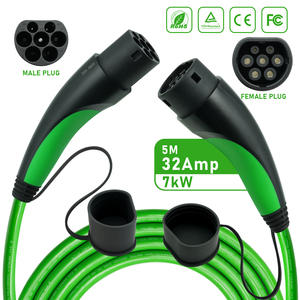
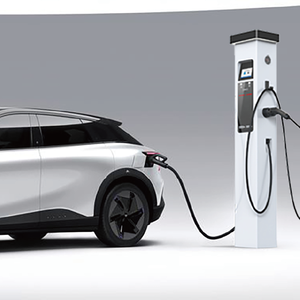
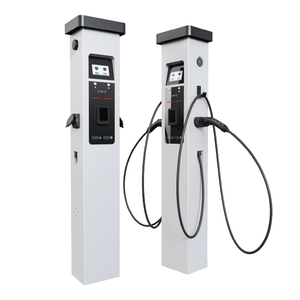
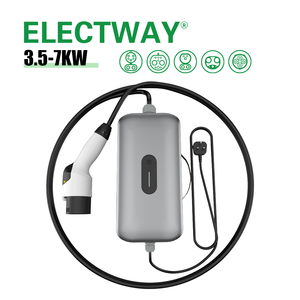
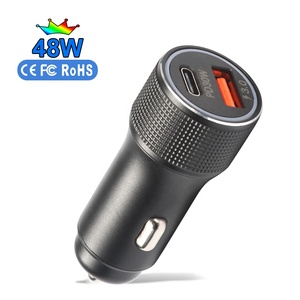
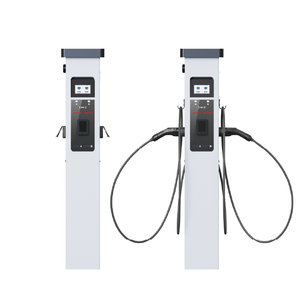
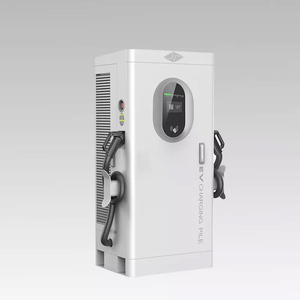
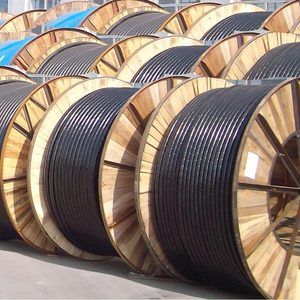
Navigating the global sourcing ecosystem for fast car chargers and Electric Vehicle Supply Equipment (EVSE) demands an uncompromised evaluation of technical capabilities, compliance verification, and operational reliability. Founded in 2011, our manufacturing consortium transitioned from precision consumer mobile accessories into commercial and residential EV charging infrastructure. Managed by a veteran in-house engineering and R&D team, our facilities bridge advanced power electronics with rigorous European compliance standards.
Unlike assembly-only suppliers, our OEM/ODM facilities operate fully integrated Surface Mount Technology (SMT) production lines, automated wire-harness assembly, and climate-controlled aging chambers. Every CE-certified charger that exits our export docks undergoes multi-tier automated test routines—including high-voltage dielectric withstand tests, ground continuity verification, thermal dissipation imaging, and dynamic load testing.
Full adherence to European LVD (2014/35/EU), EMC (2014/30/EU), and RED (2014/53/EU) directives. Verified testing against EN 61851-1, EN 62196-1/2, and IEC 62893 guarantees seamless regulatory approval for EU distributors.
Our fast chargers integrate active power potting and real-time NTC sensor matrices that sample thermal profiles 100 times per second, mitigating thermal throttling and extending operational life under high ambient temperatures.
From custom housing mold design and silk-screen logo placement to tailored firmware programming (OCPP 1.6J/2.0.1 integrations), we deliver private-label solutions tuned to market-specific brand positioning.
The automotive charging domain is undergoing a fundamental technological shift driven by higher battery pack voltages, dynamic grid pricing, and stringent international safety protocols. Sourcing directors must align their procurement strategies with multi-year hardware evolution cycles to prevent inventory obsolescence.
Modern EV platforms are migrating from 400V electrical systems to 800V architectures to facilitate ultra-fast charging speeds while minimizing conductor mass. OEM fast charger factories are increasingly swapping traditional Silicon IGBTs for Silicon Carbide (SiC) power MOSFETs. SiC technology yields up to 98.5% efficiency, dramatically reducing heat loss and allowing smaller cabinet footprints for commercial 60kW to 160kW DC chargers.
Manual app authentication and RFID card swipes are rapidly being replaced by the ISO 15118 PKI (Public Key Infrastructure) standard. Vehicles automatically negotiate encryption and billing upon plug insertion. Furthermore, future-proof procurement specifications now mandate hardware compatibility with Vehicle-to-Grid (V2G) bi-directional power conversion, enabling EV fleets to sell power back to smart grids during peak load periods.
| Performance Metric | Legacy Fast Charger Systems | CE Certified Next-Gen Standard (Our Lineup) | Strategic Procurement Value |
|---|---|---|---|
| Power Semiconductor | Silicon (Si) IGBT Modules | Silicon Carbide (SiC) MOSFETs | +30% Power Density, -40% Thermal Loss |
| Protocols & Metering | Standalone / Proprietary app | OCPP 2.0.1 + MID Certified Meter | Universal CPO Software Interoperability |
| Safety Protections | AC Standard RCD Type A | Integrated Type A + DC 6mA Leakage | Lower Installation Balance-of-Plant Costs |
| In-Vehicle PD Output | Basic 5V/2.4A USB Ports | USB-C PD 3.1 Dual 48W/100W | Rapid Charging for Laptops & Smartphones |
| Weather & Impact | IP54 / IK07 Plastic Housing | IP65 / IK10 Ruggedized Aluminum | Extended Commercial Operating Lifespan |
When selecting a certified factory exporter for EVSE or high-wattage automotive accessories, enterprise procurement managers must look beyond unit FOB prices. Technical auditing ensures long-term field reliability and reduces costly warranty claims. Below is our engineering team’s recommended evaluation matrix for fast car charger sourcing:
Demand pure oxygen-free copper conductors certified to IEC 62893 standards. Cheap copper-clad aluminum (CCA) leads to excessive voltage drops and hazardous cable heating under prolonged 32A/63A continuous loads. Ensure sheathing utilizes Thermoplastic Elastomer (TPE) or TPU for cold-weather flexibility down to -40°C.
Industrial grid spikes can compromise charger logic boards. Reliable exporters engineer 6kV surge protection devices (SPD) directly into the AC/DC input stage alongside 2.5kV isolation barriers between high-voltage power paths and low-voltage control microcontrollers.
Commercial installations require Dynamic Load Balancing (DLB) capabilities to distribute available facility amperage across multiple charging ports dynamically. Ensure charger firmware supports Over-The-Air (OTA) updates to adapt to changing OCPP server specifications.
Comprehensive technical and commercial answers regarding CE certification, OEM manufacturing cycles, custom branding, and international logistics.
To legally import and market fast car chargers within the European Economic Area (EEA), products must comply with three core directives:
AC Chargers (Level 2) supply Alternating Current to the vehicle’s onboard charger (OBC), which converts AC to DC to fill the battery pack. AC charging is ideal for overnight residential wallboxes, workplace parking, and hospitality facilities where vehicles remain stationary for 2–8 hours.
DC Fast Chargers (Level 3 / Direct Current) bypass the car’s onboard converter and feed high-voltage DC power directly into the battery pack. This allows rapid power delivery, supplying 80% charge in 15–30 minutes, making them critical for highway service corridors, commercial fleet hubs, and public fast-charging plazas.
Yes. We offer complete turnkey OEM and ODM services. Custom hardware options include custom injection mold development, aluminum extrusion color anodizing, custom silk-screen branding, and branded packaging designs. On the software side, we provide custom OCPP configuration, tailored mobile app branding (iOS/Android), and pre-flashed custom firmware settings.
Our CE certified chargers integrate an 8-point protection system:
Standard catalogue products carry an MOQ of 50 units. For customized OEM enclosure colors and branded logo printings, MOQ starts at 200 units. Prototype sample evaluation orders ship within 5–7 working days. Full container production orders (FCL) typically require 20–30 calendar days from engineering sign-off and deposit confirmation.
We back all commercial EV chargers and fast-charging accessories with a comprehensive 24-month to 36-month factory warranty. In the rare event of a component failure, our technical support engineers diagnose issues remotely via log extraction or digital diagnostic reports. Replacement power modules, control boards, or complete replacement units are dispatched via expedited air freight alongside 1% free-of-charge (FOC) maintenance spare parts included in bulk shipments.
Elevate your product catalog with high-reliability, certified EV charging infrastructure and high-wattage fast car chargers. Speak directly with our senior application engineers to request factory audit reports, technical datasheets, and competitive B2B wholesale pricing.