Certified hardware engineered for enterprise distribution, high compliance markets, and consumer electronics brands.
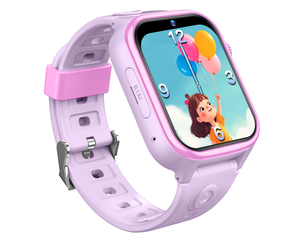
Navigating European market access for wearable electronic devices requires a rigorous technical understanding of regulatory mandates. For international distributors and brand owners sourcing from CE Certified GPS Smart Watch Factories & Exporters, compliance is far more than a decorative mark on packaging—it represents a mandatory suite of laboratory verification tests protecting end-user safety, electromagnetic compatibility, and radio spectrum integrity.
Under European Union law, modern cellular and location-tracking smartwatches fall directly under the purview of the Radio Equipment Directive (RED) 2014/53/EU. Unlike basic Bluetooth trackers, multi-frequency GPS watches transmit across multiple active RF bands (cellular 4G/5G, Wi-Fi, Bluetooth, and GNSS satellite receivers), necessitating comprehensive testing protocols:
| Directive / Standard | Technical Scope | Engineering Compliance Requirement |
|---|---|---|
| EN 300 328 / EN 301 893 | Wideband Transmission & 5GHz Wi-Fi / BT | RF output power limits, occupied bandwidth, spurious emissions control. |
| EN 303 413 | Satellite Earth Stations & Systems (GNSS) | Receiver resilience against adjacent band interference (LTE Band 13/14 filtering). |
| EN 301 489-1 / -17 / -19 | Electromagnetic Compatibility (EMC) | Immunity to electrostatic discharge (ESD ±8kV contact, ±15kV air), radiated immunity. |
| EN 62368-1 | Audio/Video & ICT Equipment Safety | Thermal dissipation thresholds, battery pack overcharge protection, mechanical shock safety. |
| EN 50566 / EN 62209-2 | Specific Absorption Rate (SAR) | RF exposure limits for limb-worn (<4.0 W/kg) and face-to-face contact (<2.0 W/kg). |
To ensure frictionless customs clearance in EU ports, certified factories must provide an official EU Declaration of Conformity (DoC) supported by a complete Technical Documentation File (TDF) issued by an accredited ISO/IEC 17025 Notified Body. Leading exporters also integrate hazardous substance management adhering to RoHS Directive 2011/65/EU and REACH Regulation (EC 1907/2006), preventing skin irritation caused by nickel leaching, phthalates, or toxic wristband compounds.
The global smartwatch landscape has evolved from simple step-counting pedometers into sophisticated wearable computing platforms. At the core of high-grade commercial and industrial GPS watches lies an intricate interplay between antenna design, power management algorithms, and sensor fusion engines.
A. Dual-Frequency L1+L5 Multi-Constellation Navigation:
Legacy GPS smartwatches operated exclusively on the single L1 frequency band (1575.42 MHz), leaving positioning accuracy vulnerable to multipath interference caused by tall urban buildings or dense tree canopy cover. Advanced OEM factories now deploy dual-frequency L1+L5 GNSS chips (supporting GPS, GLONASS, Galileo, BeiDou, and QZSS). The higher chip rate of the L5 band (10.23 MHz) eliminates urban reflection errors, boosting positioning accuracy from ~10 meters down to sub-2.5 meters in challenging environments.
B. Antenna Isolation & Liquid Crystal Polymer (LCP) Substrates:
Form factor constraints represent the greatest physical hurdle in smartwatch manufacturing. Integrating a cellular LTE ceramic patch antenna, a Wi-Fi/BT trace antenna, and a high-sensitivity GPS passive/active antenna into a 44mm casing without inducing cross-talk requires precise isolation design. Premium exporters utilize 3D LDS (Laser Direct Structuring) technology or flexible LCP substrates directly integrated into the watch frame, maximizing radiation efficiency while preserving IP68/IP69K ingress protection against water pressure.
Utilizing sub-threshold microcontrollers (e.g., Apollo4 or Nordic nRF5340 series) to sustain GNSS tracking for up to 40 continuous hours without recharging.
Multi-channel optical sensors with high-intensity green/red LEDs for continuous SpO2 monitoring, ECG signal capture, and HR tracking during intense movement.
Embedded SIM solutions allowing independent voice calling, emergency SOS alerts, and telemetry transmission without smartphone tethering.
As enterprise adoption of IoT wearables accelerates, bulk procurement strategies among brand buyers, telecommunications operators, and retail chains are shifting dramatically. Key sourcing trends shaping contract negotiations with OEM/ODM factories include:
Partnering with a reliable manufacturing exporter requires systematic verification of factory capabilities beyond superficial digital catalogs. Professional procurement teams execute a multi-tier auditing framework before placing volume purchase orders:
1. SMT Automated Optical Inspection (AOI): Inspecting surface-mount technology lines ensures micro-passives, BGA chips, and RF shields are soldered without bridging or cold joints. Leading facilities implement 3D AOI and inline X-ray inspection for high-density PCBs.
2. Waterproof Testing Chambers: Waterproof assertions (IP67, IP68, 5ATM) must be verified via both negative air pressure vacuum testing and positive hydrostatic water pressure tanks. Standardized sampling checks 100% of finished smartwatch casings.
3. Automated RF Spectrum Testing: In-line wireless testing using shield boxes and vector network analyzers verifies that antenna tuning, Wi-Fi sensitivity, and GPS cold-start TTFF (Time To First Fix <35s) meet rigid production tolerances.
Rooted in over a decade of consumer technology excellence since 2011, our integrated manufacturing and distribution network has built an unshakeable reputation for engineering reliability, product innovation, and global compliance. By combining cross-category tech expertise across personal audio, high-capacity mobile charging solutions, ergonomic accessories, and advanced smart wearables, we provide enterprise partners with a streamlined turnkey procurement ecosystem.
Dedicated engineering teams operating state-of-the-art CAD modeling, rapid 3D prototyping, and ergonomic tooling facilities to bring custom private-label concepts to market rapidly.
ISO 9001 and BSCI certified factory floors applying stringent MIL-STD-810H environmental testing, thermal cycling (-20°C to 60°C), and drop impact resistance routines.
Complete documentation support including CE RED, FCC, RoHS, REACH, and UN38.3 battery transport safety certification for instant entry into North American and European retail chains.
Clear answers to essential technical, legal, and operational questions regarding GPS smartwatch procurement.
GPS smartwatches must comply with the Radio Equipment Directive (RED) 2014/53/EU. This encompasses safety (EN 62368-1), Electro-Magnetic Compatibility (EN 301 489 series), Radio Spectrum Efficiency (EN 300 328 for BT/Wi-Fi and EN 303 413 for GNSS receivers), and SAR human exposure limits (EN 50566). Additionally, compliance with RoHS 2011/65/EU and REACH is legally required.
Standard single-band (L1) GPS chipsets consume less power but struggle with signal bounce in cities. Dual-band (L1+L5) multi-constellation receivers (GPS + Galileo + BeiDou) process sub-meter positional signals with superior signal-to-noise ratios. Modern ultra-low-power GNSS chipsets operate on dynamic duty-cycling algorithms, switching to standby between satellite updates to extend battery longevity.
For existing certified housing designs with custom logo printing, customized packaging, and firmware boot screen flashing, standard MOQs typically start at 1,000 units. For deep ODM projects involving custom tooling molds, unique PCB layouts, or custom sensor integration, MOQs typically start at 3,000 to 5,000 units depending on component supply chains.
IP68 certification requires testing against dust ingress (8 hours in vacuum dust chambers) and continuous immersion in water beyond 1 meter. 5ATM ratings require specialized pressure tanks simulating 50 meters of static water column pressure for 10 minutes. Qualified factories test 100% of watch assemblies using dry air pressure differential equipment prior to final packing.
Yes. OEM exporters provide customizable firmware protocols (MQTT, HTTP, TCP/UDP) allowing cellular smartwatches to transmit location telemetry, heart rate metrics, and SOS alerts directly to your private enterprise cloud server or mobile application server.
Elevate your product catalog with fully certified, ultra-reliable GPS smartwatches and tech accessories engineered for international retail success.
Contact Us