
Streamlined OEM/ODM inventory ready for enterprise procurement, cross-border distribution, and custom brand integration.

The global home cinema and visual display landscape has undergone a seismic technological migration over the past five years. As consumers demand larger screens, higher dynamic range (HDR), native 4K decoding, and seamless streaming integrations, consumer electronics importers, brand owners, and procurement leaders face the challenge of sourcing reliable, high-performance display hardware. Navigating the supplier matrix requires far more than comparing basic specs; it demands an engineering-level understanding of optical engine sealing, thermal dissipation, CE conformity (EMC, LVD, RED), and system-on-chip (SoC) firmware integration.
As a leading CE certified smart home projector factory and supplier, our manufacturing architecture is built specifically to address the traditional failure points of smart projectors: thermal blackouts, optical dust accumulation, color decay, and radio-frequency non-compliance. This whitepaper analyzes the engineering advancements driving modern projection technology, outlines procurement benchmarks for enterprise buyers, and explores future market vectors.
The core of any projection system is its light-valve and optical path engineering. Historically, budget 1-LCD projectors utilized open-frame optical designs where cooling fans pulled ambient room air directly across the LCD panel and polarizers. In commercial environments and modern homes, airborne dust particles adhere to liquid crystal layers, creating black spots, thermal hotspots, and premature panel degradation within 6 to 12 months of deployment.
Our OEM manufacturing lines have completely transitioned to IP5X Dustproof Fully-Enclosed Optical Engines. By isolating the LED light source, total internal reflection (TIR) prisms, and liquid crystal displays inside a sealed copper heat-pipe chamber, optical pollution is virtually eliminated. This architectural innovation extends the operational lifespan to 30,000+ hours while preserving luminance uniformity across 95% of the display canvas.
Cost-effective, high contrast ratio, zero color wheel artifacting. Ideal for mainstream consumer smart projectors requiring native 1080p output and compact form factors.
Utilizes Texas Instruments Digital Micromirror Devices (DMD) for ultra-fast response times, zero motion blur, high ANSI lumens, and superior compact portability.
Advanced Laser Phosphor Display technology offering cinema-grade wide color gamut (Rec.2020), ultra-high brightness exceeding 2,500 ANSI Lumens, and thermal stability.
For European buyers and international distributors, regulatory verification is non-negotiable. Importing non-compliant projectors into the European Economic Area (EEA) exposes brands to customs seizures, market recall notices, and severe liabilities under national market surveillance authorities. As an enterprise-grade factory, our smart home projectors undergo stringent, independent testing to maintain valid CE Declarations of Conformity (DoC) backed by accredited laboratory reports (TÜV, SGS, Intertek).
| Regulatory Directive | Technical Standard | Engineering Scope & Compliance Requirement |
|---|---|---|
| CE-LVD (Low Voltage Directive) | EN 62368-1:2014+A11 | Audio/video and IT equipment safety. Tests electrical insulation, power supply creepage distances, and internal thermal limiters. |
| CE-EMC (Electromagnetic Compatibility) | EN 55032 / EN 55035 | Ensures high-frequency optical drivers and Wi-Fi modules do not emit harmful electromagnetic interference or suffer immunity loss. |
| CE-RED (Radio Equipment Directive) | EN 300 328 / EN 301 893 | Evaluates dual-band 2.4GHz/5GHz Wi-Fi and Bluetooth 5.2/5.3 RF output power, spectral efficiency, and receiver performance. |
| RoHS 2.0 & REACH | Directive 2011/65/EU / EC 1907/2006 | Restricts 10 hazardous substances (lead, mercury, cadmium, phthalates) across all plastic housings, optical lenses, and solder joints. |
| ErP Ecodesign | (EU) 2019/1782 / (EC) 1275/2008 | Mandates standby power consumption of less than 0.50W and automated power-saving sleep timer triggers. |
The modern end-user expects a plug-and-play experience similar to a smartphone display. Legacy manual focus rings and 2D mechanical keystone correction are no longer acceptable in premium retail segments. Our technical development roadmap integrates an dual-hardware calibration stack:
By pairing a high-precision Time-of-Flight (ToF) laser rangefinder module with an ultra-wide 1080p CMOS optical camera, our proprietary auto-calibration firmware executes three critical adjustments in under 1.5 seconds:
Key technology shifts and procurement strategies for global importers, brand managers, and B2B buyers.
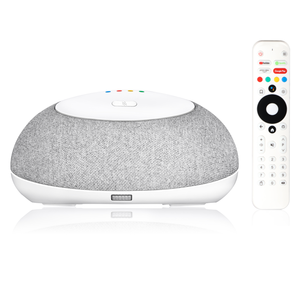
Software ecosystem licensing has become as critical as physical hardware specs. Modern buyers prioritize factory partners capable of delivering certified Android TV or Google TV OS with native Widevine L1 encryption and official Netflix/Prime Video playback compliance to avoid post-purchase app incompatibility.
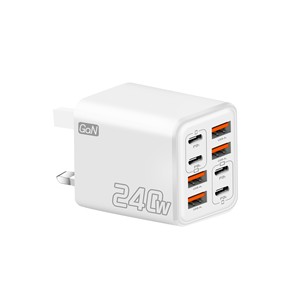
Integration of Gallium Nitride (GaN) internal power supplies or external ultra-compact 100W–240W USB-PD 3.1 power adapters allows factories to reduce projector chassis volume by 30% while increasing thermal dissipation efficiency and lowering transport freight costs per unit.
Ultra-Short Throw (UST) projection technology with zero-hazard RGB pure triple laser engines is shifting from luxury pricing into mainstream commercial production. Factories with automated optical alignment benches offer huge competitive advantages to private label distributors.
Answers to common inquiries regarding CE certification, OEM private labeling, optical specs, and minimum order quantities.
Request our comprehensive 2025 OEM/ODM Product Catalog, full factory audit reports, and competitive wholesale pricing directly from our sales engineering team.
Get Catalog