Technical Whitepaper
Engineering Overview: USB-C & Thunderbolt 4/5 Docking Architecture
As modern laptops transition toward minimalistic port designs with universal Type-C connectors, the demand for enterprise-grade USB Docking Stations, Multiport USB-C Hubs, and Thunderbolt 4 Workstation Extensions has experienced exponential growth. B2B importers and OEM brand owners sourcing from China must navigate technical variables including IC controller selection, thermal dissipation management, signal attenuation, and EMI shielding.
1. High-Speed Protocol Tunneling: USB4 vs. Thunderbolt 4 vs. USB 3.2 Gen 2
Understanding bandwidth allocation is fundamental to selecting the right dock architecture. USB4 v1.0 and Thunderbolt 4 support maximum symmetric bandwidths of up to 40Gbps, enabling packetized data, DisplayPort video signals, and PCIe traffic to be dynamically tunneled across a single differential pair cable.
- PCIe Tunneling: Essential for high-performance enterprise docking stations featuring integrated NVMe SSD slots, 2.5GbE/10GbE Ethernet controllers, or external GPU connectivity.
- DisplayPort Alt Mode 1.4 & 2.0: Utilizes physical high-speed lanes on the USB-C connector to transmit raw uncompressed video. With Display Stream Compression (DSC 1.2a), dual 4K @ 60Hz or single 8K @ 60Hz output becomes standard.
- Power Delivery 3.1 Extended Power Range (EPR): Modern workstations require upwards of 140W to 240W of dynamic power distribution, necessitating advanced IC buck-boost controllers to maintain safe thermal profiles.
2. Display Controller Architecture: Native Alt Mode vs. DisplayLink Hardware Compression
A core consideration for wholesale buyers is deciding between DP Alt Mode native docks and DisplayLink (Synaptics) graphic compression docks. DP Alt Mode delivers zero-latency hardware passthrough, ideal for gaming and color-critical video editing. Conversely, DisplayLink docks utilize software-based compression to bypass native Apple M1/M2/M3 single-external-display limitations, allowing triple screen expansion on macOS.
| Architecture Type |
Max Bandwidth |
Display Capability |
Host CPU Overhead |
Ideal Target Market |
| USB 3.2 Gen 2 MST Hub |
10 Gbps |
Dual 4K @ 30Hz or Dual 1080P @ 60Hz |
Near 0% (Hardware Native) |
Budget Commercial Office & Retail |
| USB4 / Thunderbolt 4 Dock |
40 Gbps |
Dual 4K @ 60Hz or Single 8K @ 60Hz |
Near 0% (PCIe & DP Tunneling) |
Enterprise Workstations & Creative Pros |
| DisplayLink DL-6950 Hybrid |
5 Gbps / 10 Gbps |
Triple 4K @ 60Hz (Includes macOS) |
3% - 8% (Compressed Render) |
Multi-Monitor Corporate Deployments |
| Next-Gen USB4 2.0 (80Gbps) |
80Gbps / 120Gbps Asymmetrical |
Triple 4K @ 144Hz or Dual 8K @ 60Hz |
0% (Native Ultra-Bandwidth) |
High-End Industrial & Gaming Docks |
3. Thermal Management & Aluminum Anodization Engineering
High-density docking stations that simultaneously handle 100W PD passthrough, 10Gbps USB data transfers, 2.5G LAN processing, and multi-display rendering generate substantial internal heat. Inadequate thermal design leads to thermal throttling of host chipsets, dropped network packets, and display flickering.
At our manufacturing facility, we implement structural thermal dissipation systems utilizing 6063 aluminum alloy extruded chassis, internal copper heat-sink plates, and high-conductivity thermal silicone pads (k > 3.5 W/mK). This design routes heat away from main ICs (such as VIA VL822, Realtek RTL8153, and Parade PS186) directly into the external metal casing, maintaining steady operational temperatures below 45°C during continuous heavy loads.
Market Trends
Future Development Trends in USB Docking Station Manufacturing
To maintain a competitive edge, brands must align product roadmaps with key technological and procurement shifts expected between 2025 and 2030:
1. Convergence of GaN Chargers & Docking Hubs
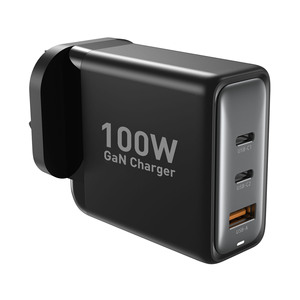
Standalone power bricks are being phased out. Next-generation OEM docking stations integrate internal Gallium Nitride (GaN) power supplies, allowing a single AC power cable to power both the dock's internal chipsets and provide up to 140W PD fast charging directly to the host laptop.
2. Widespread Adoption of 2.5GbE & 10GbE Networking
Standard Gigabit Ethernet (1000Mbps) is rapidly giving way to 2.5G Realtek RTL8156B controllers and 10G Aquantia chips as enterprise local networks adopt high-speed NAS storage and multi-gigabit fiber connections.
3. Smart DaaS & Remote Firmware Management
Enterprise IT departments require remote management capabilities. Future docks integrate cloud-connectable microcontrollers for out-of-band firmware updates, port status monitoring, and asset tracking via corporate management software.
Procurement Guide
B2B Sourcing Strategy & Procurement Insights for Buyers
Sourcing docking stations from China requires a structured approach to quality assurance, regulatory verification, and supply chain transparency. When evaluating potential manufacturing partners, procurement teams should verify:
- Chipset Sourcing Transparency: Ensure the factory uses genuine ICs from reputable vendors (Realtek, DisplayLink, Intel, VIA, Parade, Cypress) rather than unbranded secondary chips prone to high failure rates.
- EMI & ESD Protection Circuits: High-speed USB 3.0 data lines generate 2.4GHz noise that can interfere with wireless mice and Wi-Fi signals. Quality factories incorporate ESD suppression diodes (IEC 61000-4-2 standards) and chokes to guarantee interference-free operation.
- Full System Interoperability Testing: Confirm testing across multiple operating system environments (Windows 11, macOS Sequoia, ChromeOS, iPadOS, and Linux distributions).
- Custom Tooling & Brand Customization: Evaluate whether the manufacturer supports rapid prototyping, custom mold design, laser etching, and tailored retail packaging to differentiate your brand in saturated markets.
B2B Sourcing FAQ
Frequently Asked Sourcing Questions
What is the typical Minimum Order Quantity (MOQ) for custom OEM docking stations?
+
Our standard MOQ for neutral in-stock products is 100 units. For custom logo laser engraving and branded packaging, MOQ typically starts at 500 units. Full ODM projects involving custom PCBA layouts and specialized chassis tooling require an initial run of 1,000 to 2,000 units depending on technical specifications.
How do you ensure macOS compatibility across multi-display USB-C docks?
+
Due to macOS lacking native MST (Multi-Stream Transport) support for multiple extended displays over standard USB-C, we engineer dual solutions: MST docks for Windows users requiring budget multi-monitor expansion, and DisplayLink (Synaptics) or Thunderbolt certified docks for macOS users seeking independent multi-display extension.
What certifications do your USB docking stations carry for Western markets?
+
All our enterprise docking stations and fast-charging power hubs are certified under international standards including CE, FCC, RoHS, REACH, and UKCA. Upon request, we also facilitate UL, PSE, and USB-IF certification testing for specific private label orders.
What warranty and post-purchase quality guarantee do you provide to B2B buyers?
+
We provide a 12-to-24 month comprehensive factory warranty on all electronics product lines. Any batch manufacturing defects exceeding our strict 0.2% AQL threshold are eligible for immediate replacement or credit refund in subsequent production cycles.
Can you assist with customized GaN power supply integration?
+
Yes. Our internal power engineering team designs custom desktop docks featuring integrated Gallium Nitride (GaN) power supplies, supporting Power Delivery 3.0/3.1 output ratings from 65W to 140W, eliminating the need for bulky external power bricks.