
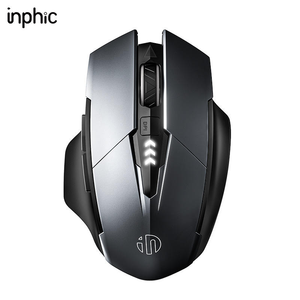
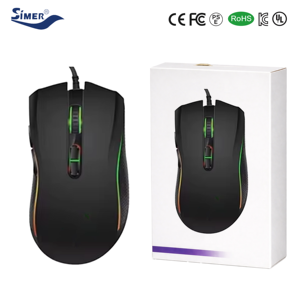
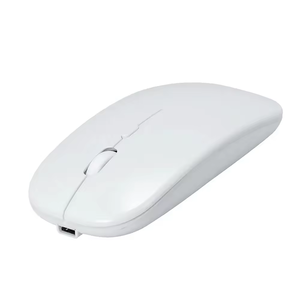
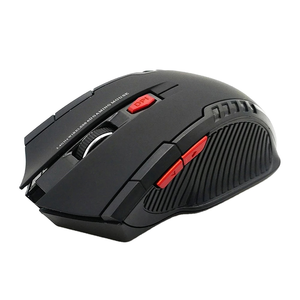
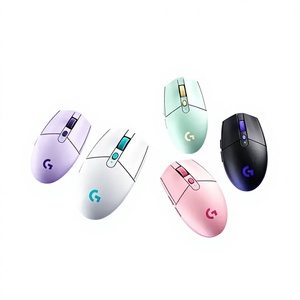
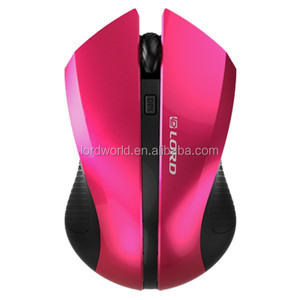
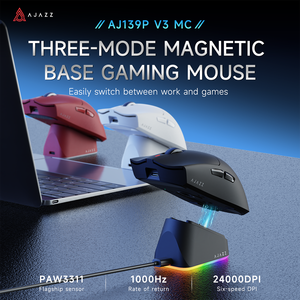
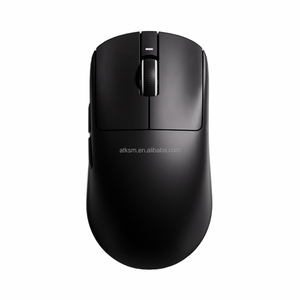
The global gaming peripheral market is undergoing a seismic architectural shift driven by demand for ultralight ergonomics, sub-millisecond wireless latencies, high-end optical tracking engines, and customizable MCU firmware. As the world's primary supply chain hub, China's peripheral manufacturing landscape has evolved beyond basic assembly into advanced mechatronic co-development.
Today, global brands, regional distributors, and e-commerce category leaders require manufacturing partners capable of navigating complex hardware-firmware integration. Sourcing a high-performance wireless gaming mouse from China manufacturers involves far more than evaluating cosmetic housing designs. It demands rigorous scrutiny of SMT surface-mount precision, optical sensor calibration (e.g., PixArt PAW3395/3311 or custom HERO-level implementations), micro-switch debouncing algorithms, multi-layer PCB EMI shielding, and high-yield automated testing.
Since establishing our foundational hardware R&D practices in 2011, our industrial approach has mirrored the evolution of consumer electronics requirements. By integrating in-house mechanical tooling, high-precision injection moulding, high-frequency SMT lines, and dedicated RF compliance test chambers, top-tier Chinese exporters deliver unmatched supply chain agility. This white paper serves as a strategic procurement guide for enterprise purchasing directors, product managers, and OEM/ODM brand strategists seeking to build market-dominating gaming peripheral lines.
To capture premium market share, hardware procurement must align with emerging competitive gaming demands. The industry has moved decisively past heavy RGB-focused designs toward hyper-engineered internal structural integrity and extreme sensor responsiveness.
The market has rejected external honeycomb cutouts in favor of internal structural ribbing and ultra-thin wall injection moulding (<0.8mm wall thickness). Advanced magnesium-aluminum alloy chassis and carbon-fiber composite materials are setting new benchmarks for structural rigidity while maintaining shell weights under 49 grams, significantly reducing wrist fatigue during intense esports usage.
Standard 1000Hz polling rates (1ms report intervals) are rapidly giving way to 4000Hz and 8000Hz hyper-polling frequencies (0.125ms delay). Incorporating high-end Nordic 52840 or Realtek dual-core microcontrollers (MCUs) ensures seamless packet transmission without packet drop or motion jitter over packet-crowded 2.4GHz ISM bands.
Traditional mechanical micro-switches suffer from metallic oxidation and double-clicking issues over time. Modern gaming mice utilize light-beam actuation optical micro-switches rated for 90M+ click lifespans. Combined with optical encoders, hardware debouncing delay is effectively zeroed out, eliminating switch latency completely.
| Architecture Spec | Entry-Level Wireless Tier | Mid-Tier Competitive Gaming | Esports Flagship Tier |
|---|---|---|---|
| Primary Sensor Engine | PAW3212 / Instant 825 | PixArt PAW3311 / PAW3335 | PixArt PAW3395 / Custom HERO 25K Equivalent |
| Target Weight Class | 85g – 105g | 60g – 75g | 42g – 55g Ultra-lightweight |
| Maximum Polling Rate | 1000Hz (1ms) | 1000Hz – 2000Hz | 4000Hz – 8000Hz High-Speed Dongle |
| Main Switch Technology | Standard Mechanical (20M Clicks) | Huano Blue Shell / Kailh GM8.0 | Light-Actuated Optical Switches (90M+ Clicks) |
| Wireless Solution | 2.4GHz Single Mode | Dual-Mode (2.4GHz + BT 5.2) | Tri-Mode (2.4GHz Low-Latency + BT 5.3 + Type-C) |
| Charging System | Replaceable AA/AAA or Micro-USB | USB-C Fast Charging | Magnetic Contact Base / Wireless Qi Base |
Procurement strategies for importers and overseas brand holders have expanded beyond negotiating unit price. Strategic sourcing directors are optimizing around four core operational dynamics:
Brands now require factory partners to offer modular shell systems. By modifying swappable back covers, magnetic side buttons, or replaceable grip plates, distributors can create multiple SKUs from a single master tooling investment, reducing capital expenditure on custom moulds.
Traditional executable software installers are being replaced by lightweight WebHID and Web-USB browser drivers. Users configure DPI steps, macro bindings, and 8K polling parameters directly inside Chrome or Edge without software installation, significantly reducing post-purchase customer support tickets.
Regulatory requirements in the EU and North America demand sustainable manufacturing. Leading Chinese OEM/ODM factories are integrating Post-Consumer Recycled (PCR) plastics into non-structural mouse frames while maintaining strict compliance with CE, FCC, RoHS, REACH, and California Prop 65 mandates.
Building on over a decade of consumer technology innovation—growing from foundational personal audio and computer peripheral lines since 2011 to broad multi-category market presence—our manufacturing infrastructure provides a turnkey competitive advantage for international buyers.
Our dedicated team of internal product developers, mechanical engineers, and acoustic/optical tuners manage hundreds of active products across computing, audio, and charging lines. We transform concept sketches into production-ready 3D CAD models within 14 business days.
Every production run is subject to rigorous testing protocols: 50-million-click switch actuation endurance, 1.5m drop testing, thermal shock chambers (-20°C to 65°C), optical alignment validation, and 100% wireless RF output testing before final master carton packing.
Whether your catalog requires high-volume entry-level silent office-gaming hybrids or flagship esports-grade wireless gaming mice with magnetic charging docks, our multi-tiered product strategy ensures scalable margins across every market segment.
Key technical and commercial considerations for sourcing wireless gaming mice directly from Chinese OEMs/ODMs.
For standard custom branding (logo silk-screening, custom packaging, localized manuals) on existing open-tooling models, our standard MOQ starts at 1,000 to 2,000 units per colorway. For full ODM projects requiring custom plastic injection tooling, custom PCB layout design, and unique firmware development, MOQs generally start at 5,000 units per project run.
We utilize premium 2.4GHz Nordic or Realtek wireless RF solutions integrated with automatic frequency-hopping spread spectrum (FHSS) logic. Each mouse undergoes rigorous RF chamber calibration to maintain stable signal transmission within a 10-meter radius, avoiding interference from Wi-Fi routers, Bluetooth devices, and peripheral crosstalk.
Yes. We provide complete software development kits (SDK) and turnkey driver solutions. We offer dedicated Windows desktop applications as well as modern WebHID (Chrome browser-based) configuration platforms branded with your company's logo, UI color scheme, macro setting layouts, custom lighting effects, and adjustable Lift-Off Distance (LOD) parameters.
All exported products are tested and certified by accredited third-party laboratories (such as SGS, TUV, or Intertek). We provide full compliance documentation including CE-RED (Europe), FCC ID (USA), RoHS 2.0, REACH SVHC, UN38.3 (lithium battery transport safety), and MSDS documentation required for global freight logistics.
Pre-production OEM samples with custom graphics and packaging are produced within 7 to 10 working days. Mass production lead time is typically 30 to 35 days upon sample approval and deposit confirmation. For full custom tooling ODM builds, mold development requires 35 to 45 days, followed by 15 days for pilot production validation.
We provide comprehensive warranty coverage as outlined in our enterprise warranty terms. In lieu of returning defective units across borders, we typically issue a 0.3% to 0.5% spare parts allocation (or finished replacement units) free of charge with each shipment container, covering standard field service and customer exchanges.
Partner directly with an established China manufacturing leader. Contact our engineering and sales consultation team today to request catalog pricing, request physical evaluation samples, or initiate custom OEM/ODM tooling discussions.