
Direct factory wholesale models with customizable battery capacities, integrated monocrystalline PV arrays, and certified safe BMS boards.
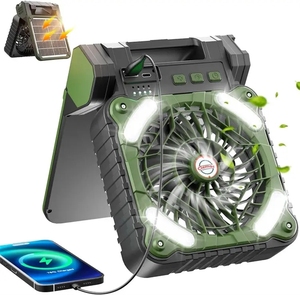
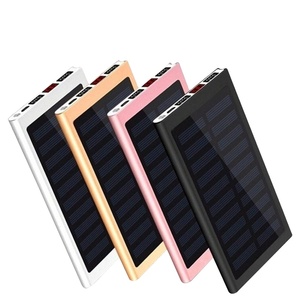
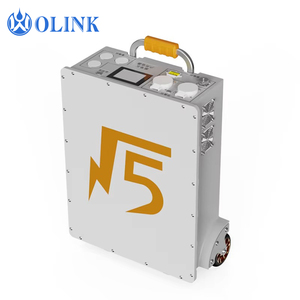
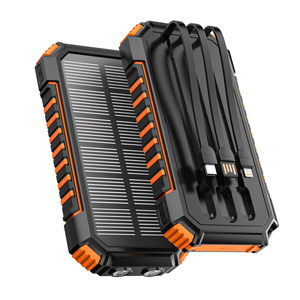
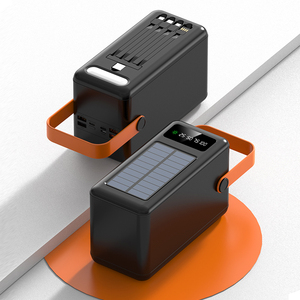
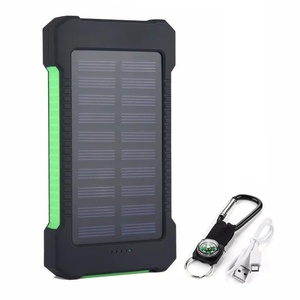
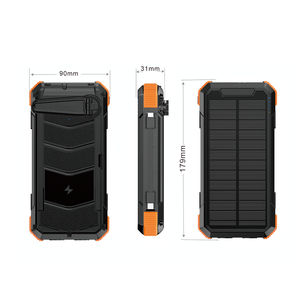
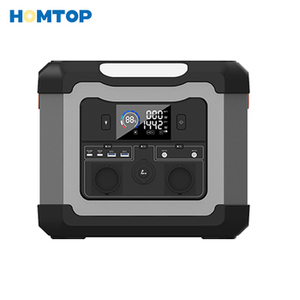
The global demand for off-grid power solutions, emergency preparedness gear, and outdoor mobile accessories has triggered a rapid engineering evolution within China’s electronics manufacturing hubs (Shenzhen, Dongguan, and Ningbo). Modern solar power banks are no longer rudimentary emergency backup batteries with low-efficiency panels; they have transformed into sophisticated micro-renewable energy harvesting platforms.
For international brand owners, procurement officers, and consumer electronics distributors, navigating China's manufacturer ecosystem requires a granular understanding of component integration. A tier-1 solar power bank OEM/ODM factory integrates four critical technology stacks: high-density lithium cells (Li-Polymer or LiFePO4), high-efficiency photovoltaic (PV) modules, intelligent Battery Management Systems (BMS) with Maximum Power Point Tracking (MPPT) logic, and ruggedized housing engineering (IP67/IP68 ingress protection).
Next-gen SunPower and ETFE laminated panels yielding 21.5%–23.5% solar conversion efficiency under solar radiance standard AM1.5.
Stable cell selection eliminating thermal runaway risk, rated for 2,000+ to 3,500+ charge cycles in heavy-duty emergency units.
Multi-stage protection against over-charge, over-discharge, short-circuits, and thermal spikes during direct sun exposure.
When evaluating suppliers, global brand managers must match battery chemistry with the end-user intent. Below is a comparative technical analysis compiled by our engineering team to assist B2B buyers in specifying BOM (Bill of Materials) requirements for custom factory orders.
| Engineering Parameter | Standard Li-Polymer Solar Power Bank | Advanced LiFePO4 Outdoor Generator | Hybrid Hand-Crank / Solar Units |
|---|---|---|---|
| Typical Capacity Range | 10,000mAh – 30,000mAh | 50,000mAh – 300,000mAh (1008Wh+) | 18,000mAh – 20,000mAh |
| Cycle Lifespan (to 80% Capacity) | 500 – 800 Cycles | 2,000 – 3,500 Cycles | 500 – 1,000 Cycles |
| Solar Panel Technology | Pet Laminated Monocrystalline | ETFE Multi-Fold PV Arrays | Single/Dual PET Monocrystalline |
| Auxiliary Energy Input | USB-C Fast Input (18W–60W) | AC Grid + DC PV Input (100W–240W) | Integrated Manual Hand Crank Dynamo |
| Thermal Stability Limit | Up to 60°C (140°F) | Up to 75°C (167°F) | Up to 65°C (149°F) |
| Target Retail Segment | Everyday Outdoor / Consumer Tech | Off-Grid RV, EV Backup, Emergency | Wilderness Survival & Disaster Relief |
As search queries shifting toward sustainable outdoor power and emergency resilience dominate consumer channels, overseas procurement strategy must adapt to four pivotal technology trends driving manufacturing in China:
Standard 5V/2A charging has been completely replaced by Fast Charging protocols (22.5W, 65W PD, and 100W Power Delivery). Modern buyers require units capable of charging laptops, drones, and smartphones simultaneously.
Products combining secondary functional utility—such as four-speed desk fans, floor camping lamps, SOS strobe panels, compasses, and manual hand-cranks—see 40% higher conversion rates in retail channels.
Consumers reject cheap PET solar films that yellow and degrade after weeks in direct sun. ETFE (Ethylene Tetrafluoroethylene) honeycomb surfaces provide superior anti-reflective light capture, scratch resistance, and IP67 dust/water sealing.
Sourcing lithium-ion powered products equipped with solar panels demands rigorous supplier vetting. Below is the exact 5-point quality assurance protocol implemented across our manufacturing facilities:
1. Cell Sorting and Capacity Grading: Factory raw materials undergo strict grading. Only Grade-A fresh lithium-polymer cells or LiFePO4 cells with internal resistance variances under ±2mΩ are approved for pack assembly.
2. High-Temperature Sun Load Aging Test: Because solar power banks are designed to sit in direct sunlight, complete assemblies undergo environmental chamber heat testing at 55°C–65°C to verify that battery swelling, housing warping, or panel delamination does not occur under operational thermal pressure.
3. Double NTC Thermal Sensing Circuitry: Overheating during solar absorption is the #1 cause of power bank failure. Advanced BMS designs incorporate dual Negative Temperature Coefficient (NTC) thermistors to throttled input current automatically when internal temperatures exceed safe operational thresholds.
4. UN38.3 & MSDS Logistics Readiness: Safe international transport via air or ocean freight requires UN38.3 lithium battery transport testing, 1.2-meter drop test compliance, and MSDS documentation. Certified factories ensure smooth customs clearance without shipment hold-ups.
Since founding our consumer technology manufacturing operations in 2011, our R&D and engineering teams have expanded from core personal audio devices to comprehensive off-grid energy storage, power banks, and portable smart tech accessories. Over more than a decade of industrial design and OEM production, we have established a robust manufacturing framework engineered for international brands and distributors.
Our dedicated product development team continuously files structural and electronic patents, delivering customized tooling, private-label casing, and PCB layout adjustments to fit partner specs.
From cost-competitive entry level 10,000mAh promotional solar units to high-end flagship VolkanoX grade portable power stations (1000Wh+), we offer structured tiered price points for optimal retail margin alignment.
All production lines adhere to published warranty standards and quality control protocols. Every unit leaves the line fully tested with CE, RoHS, FCC, and safe transport certifications.
Because portable solar panels integrated onto small power bank surfaces have a limited surface area (typically 1.5W to 10W max), solar charging is primarily engineered as an emergency backup method rather than the primary fast-charge source. Under peak sun conditions (AM1.5), a standard 1.5W panel generates approximately 200–300mA per hour. For rapid main charging, users charge via USB-C grid power, relying on the solar panel to replenish energy continuously while outdoors off-grid.
Yes. As a direct-from-factory OEM/ODM supplier, we support custom silk-screen logos, laser-etched branding, custom silicone protective sleeves, bespoke colorways, and retail box packaging (including FSC certified eco-packaging). Custom tooling and private PCB modifications are available for high-volume orders.
For standard neutral inventory models, MOQ starts as low as 100 to 500 units. For custom logo printing and customized color housings, typical OEM MOQs range between 1,000 and 3,000 units depending on the battery cell capacity and specific product structure.
For North America: FCC, UL 2056 (or UL 2743 for power stations), UN38.3, and MSDS. For the European Union: CE (EMC & LVD directives), RoHS, WEEE, and REACH compliance. Our factories provide full test documentation to ensure frictionless customs entry.
Safety is maintained through high-grade A-class lithium cells rated for elevated operating temperatures, flame-retardant ABS+PC casing materials (V-0 rated), integrated thermal insulation layers between the solar panel and cell chamber, and BMS NTC thermal cutoff circuits that pause charging if temperatures exceed safety thresholds.
Connect directly with our engineering and export team to discuss bulk ordering, private label OEM customizations, samples, and shipping logistics tailored to your target market.
Send an Inquiry