
Explore our benchmark fast-charging power banks engineered for high-energy density, intelligent thermal protection, and multi-protocol universal compatibility.
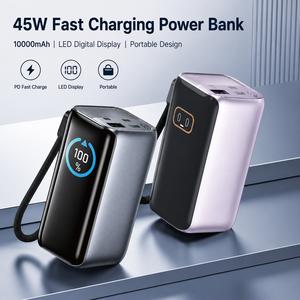
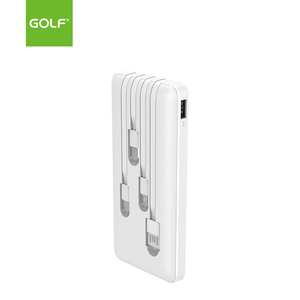
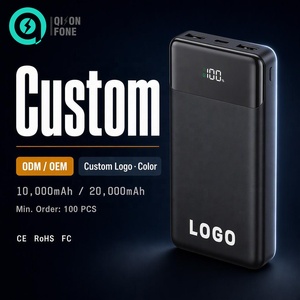
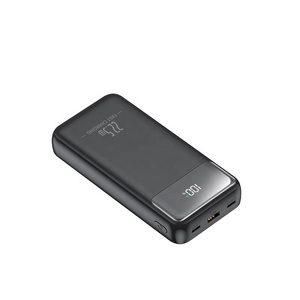
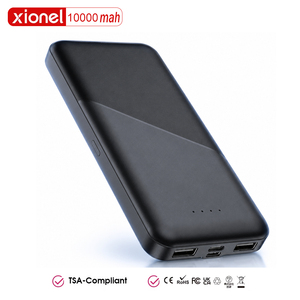
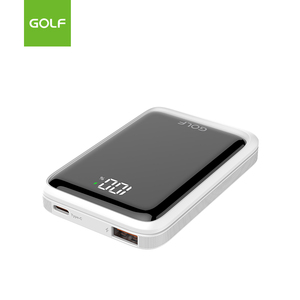
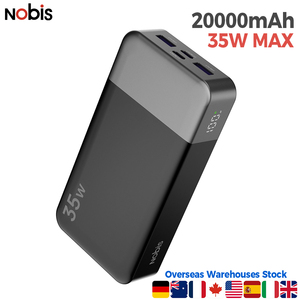
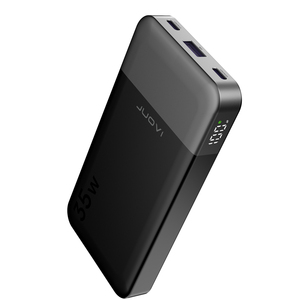
An analytical procurement guide for electronic brand owners, retail distributors, and cross-border e-commerce importers seeking high-yield power bank supply chains.
The transition from USB PD 3.0 to PD 3.1 Extended Power Range (EPR) has elevated power bank outputs from 100W up to 240W (48V/5A). Leading exporters now integrate bidirectional synchronous boost-buck controller ICs to support simultaneous fast charging for power-hungry laptops, flagship smartphones, and handheld gaming consoles without thermal throttling.
By replacing silicon MOSFETs with Gallium Nitride (GaN III / GaN Fast) power ICs, premium suppliers achieve a 40% reduction in physical enclosure size while boosting power conversion efficiency to over 94%. GaN technology significantly lowers heat dissipation, enabling ultra-slim 10000mAh and 20000mAh power banks suitable for executive air travel.
Top-tier manufacturers prioritize high-density Lithium-Polymer (Li-Po) and 21700 EV-grade Lithium-ion cells over legacy 18650 formats. Quality verification requires strict adhesion to UL 1642 cell safety, UL 2056 system safety, UN38.3 transport certification, and built-in NTC thermistors for real-time temperature sensing.
Compare critical technical parameters across standard, mid-range, and flagship fast-charge battery banks before finalizing OEM/ODM purchase orders.
| Category Segment | Capacity Range | Max Output Protocols | Cell Chemistry & Structure | Core Target Application | Compliance Standards |
|---|---|---|---|---|---|
| Ultra-Portable Daily | 5,000mAh – 10,000mAh | 20W – 22.5W (PD3.0, QC3.0, SCP) | Li-Polymer Pouch Cell | Smartphones, TWS Earbuds, Smartwatches | CE, FCC, RoHS, UN38.3 |
| Multi-Cable Travel | 10,000mAh – 20,000mAh | 22.5W – 35W (Integrated Lanyard Cables) | High-Density Li-Polymer | Travelers, Multi-device Users | CE, FCC, MSDS, UN38.3 |
| High-Output Laptop Grade | 20,000mAh – 27,600mAh | 45W – 140W PD 3.1 (PPS 5A) | 21700 EV-Grade Cylindrical / Li-Po | MacBooks, USB-C Laptops, Tablets, Phones | UL 2056, IEC 62133, CB, CE |
| MagSafe / Qi2 Wireless | 5,000mAh – 10,000mAh | 15W Magnetic Wireless + 20W PD Cable | Ultra-Thin Li-Polymer | iPhone 12-15 Series, Qi2 Enabled Devices | Qi2 Certified, CE, FCC, RoHS |
Key technological shifts shaping the next era of mobile power supply sourcing and global consumer demand.
The adoption of the WPC Qi2 standard, based on Apple’s MagSafe alignment design, is rapidly expanding across Android and iOS ecosystems. Enterprise buyers are shifting orders toward fast magnetic wireless power banks with active cooling layers and kickstands, replacing 7.5W Qi legacy chargers with true 15W wireless output capabilities.
Basic LED indicator dots are being replaced by real-time color TFT/LCD displays. Advanced power banks now provide granular telemetry: exact battery percentage, real-time input/output wattage per port, estimated full-charge time, battery health cycles, and board operating temperature. This transparency significantly boosts retail perceived value.
To counter battery capacity degradation (where standard Li-Po cells drop to 80% health after 300-500 cycles), premium exporters are integrating Lithium Iron Phosphate (LiFePO4) and semi-solid-state chemistry. LFP cells offer over 2,000-3,000 operational cycles, providing eco-friendly durability and enhanced thermal stability up to 60°C without thermal runaway.
Modern mobile workers demand pass-through charging capabilities with true Uninterruptible Power Supply (UPS) microsecond switching. This feature allows the power bank to act as a desktop bypass power station, charging itself while simultaneously supplying clean, regulated voltage to connected laptops and mobile devices.
Established in 2011, our manufacturing infrastructure combines robust in-house R&D with strict quality assurance protocol management. From custom tooling design, PCB schematic layout, and firmware programming to automated SMT assembly and 100% full-load aging tests, we empower global brands to deliver reliable, high-margin consumer power products.
✔ SMT Automated Optical Inspection (AOI)
✔ Battery Capacity & Internal Resistance Grading
✔ High-Voltage Dielectric Insulation Testing
✔ 4-Stage Burn-in & Aging Chamber Verification
✔ 100% Final Inspection Before Sea/Air Shipping
Expert answers to common commercial, technical, and regulatory questions regarding wholesale power bank purchasing and exporting.
When auditing top power bank exporters, focus on four critical pillars: 1. Battery Cell Quality: Ensure the manufacturer uses Grade-A Li-Polymer or 21700 cells from certified cell manufacturers. 2. Conversion Efficiency: Demand test reports confirming >85%-92% board-level conversion efficiency. 3. Multi-Protocol Chipsets: Verify full hardware integration for PD 3.0/3.1, PPS, QC4+/QC3.0, SCP, and FCP fast charging. 4. Compliance & Certifications: Confirm valid UN38.3 test reports, MSDS documentation, UL 2056 / IEC 62133 safety standards, and regional marks (CE, FCC, RoHS, PSE, UKCA).
The primary difference lies in output voltage/current negotiation capability and target device compatibility: PD 20W/22.5W: Engineered specifically for rapid mobile phone charging (e.g., iPhone 12-15 fast charge from 0 to 50% in 30 minutes). PD 35W/45W: Ideal for tablets, iPad Pro, ultrabooks, MacBook Air, and fast dual-smartphone charging. PD 100W–140W (PD 3.1): Designed for heavy-duty power delivery to high-performance laptops (e.g., MacBook Pro 16"), workstations, steam decks, and high-capacity portable power stations.
Lithium-ion batteries are classified as Class 9 Dangerous Goods under international transport regulations. UN38.3 requires power banks to pass 8 rigorous environmental and safety tests (altitude simulation, thermal testing, vibration, shock, external short circuit, impact, overcharge, and forced discharge). MSDS (Material Safety Data Sheet) provides detailed chemical handling procedures. Without these valid certifications, airlines and ocean carriers cannot accept power bank shipments for international freight.
Gallium Nitride (GaN) is a wide-bandgap semiconductor material that replaces traditional silicon switches in power circuits. GaN switches faster, operates at higher voltages, and generates dramatically less thermal waste. In power bank design, GaN allows engineers to pack 20,000mAh capacity and 100W+ output into compact housings that are up to 40% smaller and significantly lighter than traditional chargers while maintaining low surface operating temperatures.
Full OEM/ODM customization services include: Cosmetic Customization: Silk-screen logo printing, laser etching, custom pantone enclosure colors, soft-touch metallic finishes, and tailored retail packaging (box design, blister packaging). Hardware/Firmware Customization: Custom LED/LCD boot animations, adjusted power allocation profiles across multiple USB-C ports, integrated cables (Lightning, USB-C), and custom PCB layout engineering to meet specific dimensional constraints.
Standard commercial warranties cover 12 to 24 months from the date of bill of lading delivery. Tier-1 manufacturing facilities maintain an overall AQL (Acceptable Quality Limit) standard of Major 0.65 / Minor 1.5, guaranteeing a factory RMA defect rate below 0.3%. High-grade factories implement 100% full-cycle battery cell capacity testing and automated aging before shipment.
Yes. International aviation safety authorities (such as IATA and the FAA) limit carry-on power banks to 100 Watt-hours (Wh) per battery pack without special airline approval. The Watt-hour calculation formula is: Wh = (mAh × Voltage) / 1000. For a standard 3.7V lithium cell: a 20,000mAh power bank equals 74Wh, and a 26,800mAh power bank equals 99.16Wh. Both fall under the 100Wh restriction and are fully compliant for airline passenger carry-on luggage.
Partner with a trusted manufacturer offering high-efficiency fast-charging technology, robust regulatory compliance, and dependable global delivery.
Contact Us