
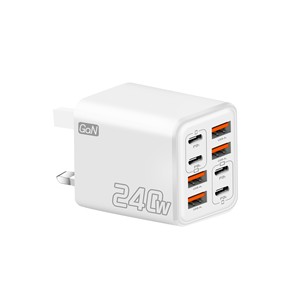
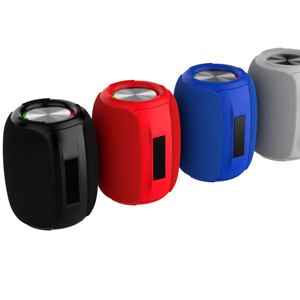
Engineered for reliability, multi-device charging efficiency, and commercial versatility. Explore our core export inventory built for global markets.
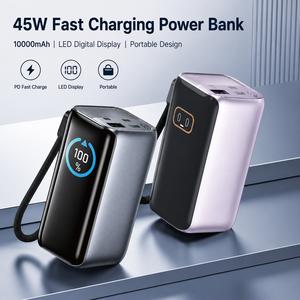


The global demand for decentralized, portable energy storage systems (ESS) has reached an unprecedented turning point. Driven by an intensifying frequency of power grid instabilities, expanding outdoor recreational economies, and the rapid electrification of commercial tools, portable power stations have transitioned from niche consumer gadgets into critical infrastructure assets for off-grid living, emergency preparedness, and remote professional workflows.
As a leading portable power station manufacturer and exporter, our R&D team tracks three overarching technological shifts redefining international procurement standards:
Traditional Nickel Manganese Cobalt (NMC) batteries are rapidly being phased out in favor of LiFePO4 chemistry. Offering up to 3,500 to 6,000 charge cycles to 80% original capacity (compared to a mere 500 cycles in standard lithium-ion cells), LiFePO4 eliminates thermal runaway risks up to 500°C. Furthermore, emerging sodium-ion technology is setting new benchmarks for extreme low-temperature discharge capabilities (-30°C performance retention), presenting procurement teams with versatile options across cold-climate markets.
Bulky, external AC-to-DC adapters are officially obsolete. Modern power stations integrate high-frequency bi-directional inverter technology, allowing direct AC wall plug charging without heavy power bricks. Modern stations achieve 0% to 80% state-of-charge (SOC) in less than 50 minutes. Furthermore, sub-10ms Uninterruptible Power Supply (UPS) switching speeds ensure sensitive IT gear, medical equipment, and servers remain continuously powered during unexpected blackouts.
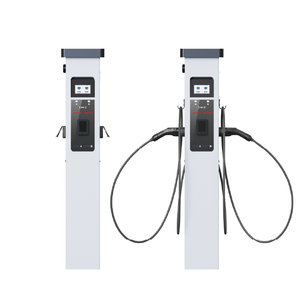
By pairing Gallium Nitride (GaN) semiconductors inside internal power distribution boards with ultra-efficient Maximum Power Point Tracking (MPPT) solar controllers, solar input conversion efficiencies now routinely exceed 99.5%. Portable power stations have evolved into modular eco-systems capable of simultaneously accepting solar, AC grid, vehicle DC, and EV charging station inputs.
Our dynamic Battery Management System monitors cell voltage, thermal boundaries, over-current, short-circuits, and state-of-health (SOH) in real time with hardware-level redundancy.
Total Harmonic Distortion (THD) under 3% ensures ultra-clean power output. Protects sensitive laptops, medical CPAP devices, and variable-frequency power tools from electrical damage.
Fully compliant with UN38.3 transport safety standards, UL2743 portable power guidelines, CE, FCC, RoHS, and MSDS documentation for frictionless customs clearance.
Building on over a decade of consumer technology and power engineering innovation (established in 2011), our manufacturing infrastructure offers end-to-end solutions for brand owners, regional distributors, and enterprise buyers worldwide. We combine deep R&D capabilities with scalable, lean manufacturing lines.
Unlike trading entities, our in-house engineering and design teams control every aspect of product development—from PCB layout design, thermal airflow simulation, and firmware programming to custom tooling and ergonomic enclosure molding. This enables agile turnaround for custom OEM/ODM brand specifications.
Every unit leaving our production line undergoes rigorous 100% full-capacity burn-in testing, high-vibration simulation, drop tests, thermal chamber cycle tests (-20°C to 60°C), and acoustic noise evaluations. Our strict quality metrics guarantee minimal RMA return rates for distributors.
We support full localization for target markets: AC outlets (US, EU, UK, AU, Universal), high-wattage USB-C Power Delivery (PD 100W/140W), wireless charging pads, DC5521, and Anderson connectors. Optional IoT smart connectivity allows users to monitor real-time wattage via Bluetooth/Wi-Fi apps.
Leveraging direct strategic partnerships with top-tier battery cell suppliers, we guarantee consistent battery batch matching, stable pricing, and reliable lead times. All power products are backed by standard commercial warranties and robust after-sales engineering technical support.
To maximize inventory turn and satisfy diverse consumer demand profiles, B2B procurement managers should structure their power station portfolio across three standardized capacity tiers:
Answers to critical technical, manufacturing, and shipping inquiries for commercial buyers.
Partner with a trusted manufacturer to deliver cutting-edge, certified portable power stations to your regional market. Contact our technical sales team today for catalog access, OEM quotes, and factory audit scheduling.